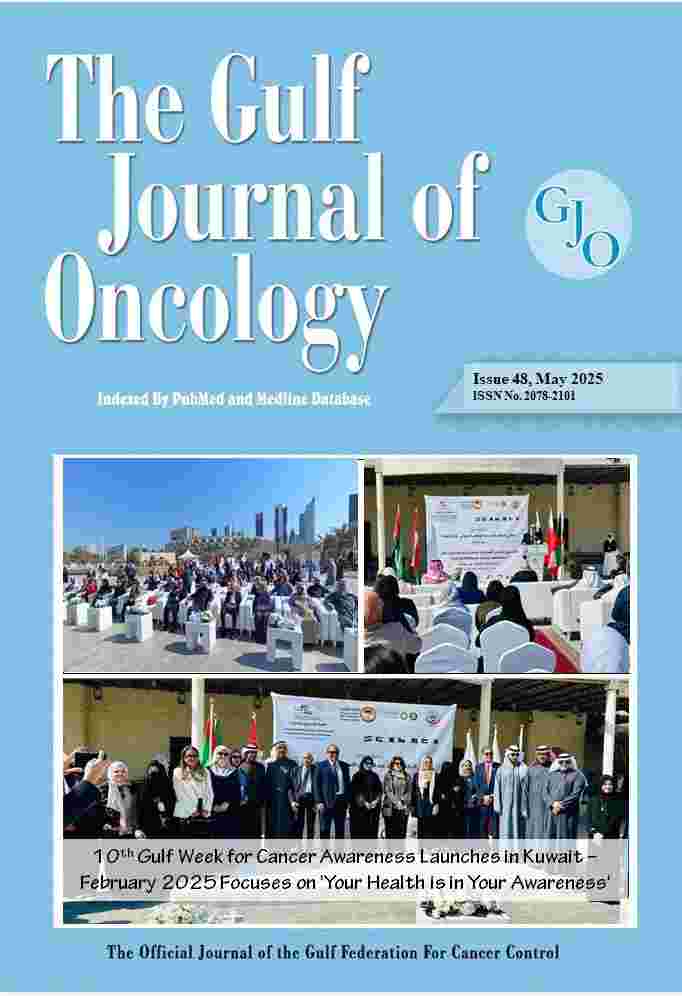
 Issue No. 48, May 2025 Electronic ISSN 2521-3881 |
||
| Issue No. 48 - May2025 | ||
| 7-14 | Survival outcomes and prognostic factors of extragonadal germ cell tumors: An institutional experience over a decade | |
|
S. Bindhu, Meher Lakshmi Konatam, Rachana Chennamaneni, Sadashivudu Gundeti Nizam's Institute of Medical Sciences, Hyderabad, Telangana, India | ||
| Abstract | ||
|
Background : Extra gonadal germ cell tumors (EGCT) are rare tumors with late presentation to the oncologist. Though they respond well to chemotherapy, cure is compromised in the real world due to various factors. This study was undertaken to assess the clinical profile, survival outcomes and factors effecting outcomes of extragonadal germ cell tumors in men.
Patients and Methods: This is a retrospective study of male extra gonadal germ cell tumors diagnosed and treated from January 2011 to December 2021. Patient demographics, tumor characteristics and treatment details were retrieved from case records.
Statistical analysis: Kaplan-Meier estimates of survival was used for survival analysis. Cox regression model was used to analyze the prognostic factors using SPSS version 25. Results: A total of 32 patients were analyzed. The median age at presentation was 26 years (range:13-40years). Primary site of the disease was mediastinal in 25patients (78%), retroperitoneal in 4(12%) and intracranial in 3patients (10%). Histology was non seminomatous in majority of mediastinal tumors (15 patients (60%)) while all the retroperitoneal tumors were non seminomatous. Ninety four percent of the patients completed the planned cycles of chemotherapy. BEP was the most common chemotherapy regimen used (n-21 ,65%). Post chemotherapy residual disease was present in 13 patients (10 nonseminomatous, 3 seminomatous), who underwent surgery (9 patients) and radiotherapy (3patients). Median time to relapse was 8 months (range 1-11). Univariate analysis showed that nonseminoma histology, mediastinal site, post chemotherapy elevated tumor markers, Eastern Cooperative Oncology Group performance status (ECOG PS) more than 2, poor risk on International Germ Cell Cancer Collaborative Group (IGCCCG) risk stratification were associated with inferior outcomes. On multivariate analysis, non-seminoma histology, mediastinal site, ECOG PS >2 and IGCCCG poor risk were associated with statistically inferior OS. At a median follow up of 65 months (range 1-132 months) 2-year PFS and OS were both 100% in seminoma and both 65% in non-seminoma.
Conclusions : Mediastinum is the most common site of EGCT. Site of the primary, non-seminoma histology, poor performance status and poor risk disease are factors contributing to inferior outcome and high mortality. Early medical attention and newer salvage therapies for refractory disease are needed to improve the survival of these patients.
Keywords: extragonadal germ cell tumor, mediastinal germ cell tumor, non-seminoma, retroperitoneal germ cell tumor
|
||
| full article | ||
| 2 | 15-22 |
Baroreflex Sensitivity, Vascular Status, and Cardiorespiratory Fitness In Breast Cancer Survivors - A Cross-sectional Analytical Study |
|
Aashish S Raman1, Rajalakshmi Rajasegaran2, Govindarajan Vishnukanth3, Rajeswari Aghoram4, Biswajit Dubashi5, Usha Dhanaradja6, Allen Timothy7 1III Year MBBS Student, Jawaharlal Institute of Postgraduate Medical Education and Research (JIPMER), Puducherry - 605006, India. 2Associate Professor, Department of Physiology, Jawaharlal Institute of Postgraduate Medical Education and Research (JIPMER), Puducherry - 605006, India. 3Additional Professor, Department of Pulmonary Medicine, Jawaharlal Institute of Postgraduate Medical Education and Research (JIPMER), Puducherry - 605006, India. 4Additional Professor, Department of Neurology, Jawaharlal Institute of Postgraduate Medical Education and Research (JIPMER), Puducherry - 605006, India. 5Professor, Department of Medical Oncology, Jawaharlal Institute of Postgraduate Medical Education and Research (JIPMER), Puducherry - 605006, India. 6M.Sc., Medical Physiology, Department of Physiology, Jawaharlal Institute of Postgraduate Medical Education and Research (JIPMER), Puducherry - 605006, India. 7III Year MBBS Student, Jawaharlal Institute of Postgraduate Medical Education and Research (JIPMER), Puducherry - 605006, India. | ||
| Abstract | ||
|
Background : Breast cancer is the most prevalent malignancy, affecting millions annually. Although advancements in therapeutic measures have resulted in diminished mortality rates, the cardiovascular and pulmonary side effects of these therapies raise clinical concerns. Methods :This cross-sectional study evaluated baroreflex sensitivity (BRS), vascular status, pulmonary function and cardiorespiratory fitness (CRF) in 33 breast cancer survivors (BCS) aged 30-60 years, two to three years post-treatment, compared to 33 age and BMI-matched healthy females.
Results : BRS was significantly lower in BCS (p<0.05), indicating autonomic dysfunction. Pulmonary function tests revealed reduced FEV1, FVC, FEV1/FVC ratio, FEF25%-75%, and PEFR in BCS (p<0.05), suggesting impaired respiratory health. CRF was also diminished, with a significantly lower VO2 max in BCS compared to controls (31.2 ± 13.1 ml/ kg/min vs. 37.4 ± 11 ml/kg/min, p=0.041). Furthermore, the Ruffier Dickson Index (RDI) was significantly higher in BCS than in controls (5.8 ± 2.2 vs. 4.6 ± 1.3, P=0.009), indicating reduced cardiovascular fitness and recovery efficiency after physical exertion. However, no significant differences were observed in carotid intima-media thickness (CIMT) or blood pressure parameters between the groups. A statistically significant association was found in RDI categories between groups (χ² = 6.554, P=0.038), indicating a difference in RDI grading distribution between healthy controls and breast cancer survivors.
Conclusion: Breast cancer survivors are at increased risk of impaired cardiac autonomic and pulmonary functions, likely as a result of the adverse effects of chemotherapy and radiotherapy. These findings highlight the need for comprehensive post-treatment monitoring and targeted rehabilitation strategies to mitigate cardiopulmonary risks and enhance the quality of life of these individuals. Keywords: Autonomic nervous system, Baroreflex sensitivity, Breast cancer survivors, Carotid intima-media thickness, Cardiorespiratory fitness, Pulmonary function, Ruffier-Dickson Index (RDI).
|
||
| full article | ||
| 3 | 23-30 | Patterns and Trends of Colorectal Cancer in the United Arab Emirates: A Retrospective Cohort Study, 2012-2021 |
|
Ahmad Amrou1, Ali Al-Najjar1, Rachid Kaddoura1, Masa Alashkar1, Zainab Al-Abdullah1, Samuel B. Ho1,2, Neshteman Oghanna3, Faisel Ikram4, Shroque Zaher5 1 College of Medicine, Mohammed Bin Rashid University of Medicine and Health Sciences, Building 14, Dubai Healthcare City, Dubai, United Arab Emirates. 2 Department of Medicine, Mediclinic City Hospital, Dubai, United Arab Emirates 3Department of Laboratory Medicine, Mediclinic City Hospital, Dubai, United Arab Emirates 4Department of Surgery, Mediclinic City Hospital, Dubai, United Arab Emirates 5Department of Pathology, Clemenceau Medical Center, Dubai, United Arab Emirates
| ||
|
Background: Colorectal cancer (CRC) is the third most diagnosed cancer and the second most fatal cancer worldwide. Recent data indicate that colorectal cancer incidence may be increasing in younger age groups. Our primary objective was to assess patterns and trends of colorectal cancer in a tertiary care hospital in Dubai. Methods: Retrospective cohort study, where data from 560 patients diagnosed with CRC in a tertiary care hospital in Dubai, United Arab Emirates (UAE) from 2012 up to 2021 were analyzed. Studied data included sociodemographic, clinical, and histopathologic variables. Results: The incidence rate of CRC cases increased from 29.9 cases per 1000 patients in 2012 to 118 cases per 1000 patients in 2020, followed by a decrease in 2021 following the COVID-19 pandemic. The frequency of CRC was higher among males (56.4%) compared to females (43.4%). The mean age of patients was 54.8 years old (SD = 13.7). Prevalent nationalities included Emirati (21.6%), Indian (10.4%), and United Kingdom (UK) (8.8%). 175/406 (43.1%) had locally advanced disease (pT4) and 134/424 (31.6%) had metastatic disease at presentation. The percentage of CRC cases diagnosed at ages less than 50 years was consistently high over time, ranging from 24- 50% of total CRC cases. Discussion and Conclusion: The results indicate an alarming increase in the incidence of CRC, including within the younger population aged ≤50 years. CRC incidence increased from 2012 through 2021 in this tertiary center in Dubai and was common in younger age groups, with the majority diagnosed in advanced stages. This indicates the need for increased screening in this region. Keywords: Colorectal neoplasms, Epidemiology, Screening, United Arab Emirates, COVID-19
|
||
| full article | ||
| 4 | 31-36 |
Cytotoxic Effect of Chemotherapy in Women with Breast Cancer in the Wilaya of Oran |
|
Fatima Zohra Tahari1,3, Asmahane Medjdoub2,3, Zineb Tahari2,3, Fatima Zohraa Boussouf3, Saddek Yahia3, Houria Ouldcadi3, Tewfik Sahraoui3 1 Faculty of Sciences and Technology, University of Ain Temouchent Belhadj Bouchaib, BP 284 Ain temouchent, Algeria. 2 Faculty of Natural and Life Sciences, University of sciences and technology of Oran Mohamed Boudiaf, Bp15, Oran, Algeria. 3Laboratory of Developmental Biology and Differentiation, Faculty of Natural and Life Sciences,
University of Oran 1 Ahmed Ben Bella, BP 16, Oran, Algeria.
| ||
| Abstract | ||
|
Introduction : Chemotherapy is a widely used treatment
for cancer that involves the use of powerful drugs to
destroy cancer cells or inhibit their growth. These drugs
can target rapidly dividing cells, which includes cancer
cells, but they can also affect healthy cells, leading to side
effects. Chemotherapy is often used in combination with
other treatments such as surgery or radiation therapy,
depending on the type and stage of cancer. While it can
be highly effective in shrinking tumors and preventing
cancer spread, it also carries risks of toxicity and longterm
health effects. Methodology: In the first research axis, we studied the risk factors through appropriate questionnaires and performed a histopathological study followed by an immunohistochemical study of tumor markers: HER2, ER, and PR in breast carcinomas in a series of 569 cases. In the second axis of this study, our objective was to study was conducted to assess the cytotoxic effects of chemotherapy in women with breast cancer in Oran, Algeria. The study included women diagnosed with breast cancer who were undergoing chemotherapy at healthcare facilities in the Wilaya of Oran. We conducted a study on 569 women diagnosed with breast cancer at the medical oncology department of the University Hospital Center of Oran. Results and Discussion: Based on the results of a followup on tolerance and biological examination conducted after several chemotherapy cycles, we observed that side effects were noted in 569 patients. 199 patients had an abnormal liver function test, and 63 patients experienced severe hepatotoxicity. In our study series, the results show that the most frequent histological type is the invasive ductal carcinoma (IDC) with a SBR grade II. Cytotoxic drugs such as taxanes, platinum salts, etc., can cause side effects on the entire body (digestive, skin, hepatic, etc.). They are generally administered as combination therapy. According to the results obtained, only 63 patients exhibited hepatic toxicity, evaluated through various biological parameters predictive of hepatic status. Conclusion: These preliminary results indicate that the toxic effects of chemotherapy delay the patients' recovery, which is why doctors take into account the symptoms reported by the patients and these biological assessments. Keywords: Breast cancer, chemotherapy, toxicity, therapy. |
||
| full article | ||
| 5 | 37-47 | Outcomes of Radiotherapy for Early-Stage Laryngeal Cancer: A 12-Year Retrospective Review. |
|
Shehzad K1, Alrajhi N1, Alwhaid M2, Alnagmy A3, Shehadeh M4, Alsemali A5, Gamal M6, Aldehaim M6 11Department of Radiation Oncology, King Faisal Specialist Hospital and Research Center, Riyadh, Saudi Arabia |
||
| Abstract | ||
|
Simple Summary : This single-institution retrospective study from King Faisal Specialist Hospital and Research Center in Riyadh examined radiotherapy outcomes in 62 patients with early-stage laryngeal cancer (Tis, T1-T2 N0M0) treated between 2009-2021. The investigation compared three fractionation schedules: 60 Gy/25 fractions, 63 Gy/28 fractions, and 66 Gy/33 fractions, with hypofractionated regimens predominating (>90% of patients). Tomotherapy emerged as the preferred treatment technique (66.1% of cases). At 5-year follow-up, the study demonstrated promising outcomes with overall survival of 80.2%, local control of 80.5%, regional control of 96.77%, and cancerspecific survival of 84.6%. Despite the cohort's high smoking prevalence, these results align with international reports, supporting external beam radiotherapy as an effective and safe approach for early-stage laryngeal malignancies. Background : Laryngeal cancer commonly originates in the glottic region and frequently presents at early stage (cT1-T2 N0M0, AJCC 8th edition). Both external beam radiation therapy (EBRT) and surgery demonstrate excellent efficacy as single-modality treatments for these early-stage malignancies. Methods: We conducted a retrospective analysis of patients with early laryngeal carcinoma (Tis, T1-T2 N0M0) treated exclusively with External beam radiation therapy EBRT at King Faisal Specialist Hospital and Research Center in Riyadh from 2009-2021. Treatment consisted of one of three fractionation schedules (60Gy/25, 63Gy/28, or 66Gy/33) delivered via Tomotherapy, 3DCRT, or IMRT/ VMAT. We evaluated demographic characteristics, risk factors, and multiple survival endpoints including local control, regional control, overall survival, and cancerspecific survival. Results: The study comprised 62 patients (mean age: 60.4 years), predominantly male (90.3%) with high smoking prevalence (74.2%). All patients presented with voice hoarseness. Hypofractionated regimens were administered to over 90% of patients, with Tomotherapy being the most utilized technique (66.1%), followed by IMRT/VMAT (25.8%) and 3DCRT (8.1%). Treatment was well-tolerated with no grade 3-4 toxicities and manageable early side effects. The 5-year outcomes demonstrated favorable results: local control (80.5%), regional control (96.77%), overall survival (80.2%), and cancer-specific survival (84.6%). Conclusion: Definitive radiotherapy has demonstrated efficacy and safety as a primary treatment modality for early-stage laryngeal cancer, consistent with prior studies. The outcomes from our cohort, despite the notably high prevalence of smokers, are comparable to international benchmarks, further confirming external beam radiotherapy's role as an effective therapeutic option for early-stage laryngeal carcinoma. Nonetheless, the significant smoking rates observed in our patient population highlight the critical need to incorporate smoking cessation strategies into comprehensive management plans to further enhance treatment outcomes and reduce risks. |
||
| full article | ||
| 6 | 48-52 | Utility of specific human papilloma virus DNA PCR to detect HPV in oral squamous cell carcinoma |
|
Doshi Preeti R1, Lakhe Rachana, Christopher Annu, Jain Avantika, Bharadwaj Reena P Department of Pathology, Bharati Vidyapeeth (DU) Medical College, Pune |
||
| Abstract | ||
|
Introduction: Head and neck cancers represent the sixth most common cancer worldwide with approximately 630,000 new patients diagnosed annually resulting in more than 350,000 deaths every year. It is essential for the understanding the biological behavior of oral squamous cell carcinomas and pre-cancerous lesions that may be responsible for malignant transformation. Heterogeneity in prevalence and anatomic distribution are associated to demographic differences in the habits of exposure to tobacco and alcohol. It has been demonstrated that HPV infection is an independent prognostic factor, even in smoking patients, with 58% reduction of the risk of death. The wide variation in HPV prevalence can be attributed to different detection techniques, small sample numbers, differences in the lesions and sampling techniques and epidemiological characteristics of the populations studied. Among the many methods to detect HPV infections, polymerase chain reaction (PCR) have been well validated. HPV-positive oral squamous cell carcinomas may have a better prognosis than HPV-negative oral squamous cell carcinomas as HPV specific therapies may be available in near future. This study has been an effort to find out the incidence of HPV in oral squamous cell carcinoma in our setting. Keywords: HPV, Polymerase chain reaction, Oral squamous cell carcinoma |
||
| full article | ||
| 7 | 53-59 | Clinical Spectrum of Sarcoma in the Sultanate of Oman |
|
Maitha Al Sibani1, Ajit Venniyoor2, Kawther Al Lawati3, Ahmed AlLawati4, Maryam Al Nabhani5 1MD, Oman Medical Specialty Board, Department of Adult Oncology in National Oncology Center, The Royal Hospital, Muscat, Oman. |
||
| Abstract | ||
|
Introduction: Sarcomas are a group of malignant tumors arising from mesenchymal tissue, with variable presentations and outcomes. Multiple factors contribute to the prognosis of the disease. As they are relatively infrequent, data on their clinical spectra and treatment outcomes are limited. The aim of this study is to identify the clinical spectrum of sarcomas in the Sultanate of Oman. Methods: This is a single-center, retrospective study, conducted in The Royal Hospital, Muscat. The target population was sarcoma patients aged 18 years and above, who were diagnosed and treated over 5 years between 2016 to 2020 in this hospital. Results: A total of 234 patients with histologically proven soft tissue and bone sarcomas were included in the study. The median age of the patients was 43 years. Soft tissue sarcomas (STS) constituted the most common type (72.2%). The most common histopathologic subtype of STS was uterine sarcoma at 25.8%, followed by gastrointestinal stromal tumors (GIST) (12.4%). Among 234 patients, 60 patients had metastatic disease and received palliative chemotherapy, and 174 patients were treated with curative intent. The mean progression free survival (PFS) in localized and metastatic bone sarcomas was 52.0 months and 10 months respectively. In STS cohort, the mean PFS in localized and metastatic was 33.0 months and 23.0 respectively. The mean of overall survival (OS) was 58.8 months and 11.8 months in localized and metastatic bone sarcomas while in STS, the mean of OS was 91.0 months and 26.0 months respectively. There was a statistically significant association between age and survival in STS, while the same was not seen in bone sarcomas. Conclusion: Sarcomas are infrequent tumors with variety of histological subtypes and prognosis. We observed a gradual decline in survival with advancing age in the STS group. Keywords: Sarcoma, soft tissue, Bone, Prognosis |
||
| full article | ||
| 8 | 60-66 | Comparative Efficacy and Toxicity of Gemcitabine-Cisplatin vs. Gemcitabine-Carboplatin in Metastatic Carcinoma of the Urinary Bladder: A Retrospective Review |
|
Varun Goel1, Arpit Jain2, Dharmistha Basu2, Nivedita Patnaik3, Vineet Talwar4, Siddhant Swamy5, Sudhir Rawal6 1Senior Consultant, Department of Medical Oncology, Rajiv Gandhi Cancer Hospital, New Delhi, India. |
||
| Abstract | ||
|
Background: Cisplatin-based chemotherapy is the standard first-line treatment for advanced urothelial carcinoma of the bladder. Many patients cannot receive cisplatin due to advanced age, renal insufficiency, and poor performance status. As an alternative, gemcitabinecarboplatin (GCa) is frequently used, yet the comparative efficacy of GCa vs. gemcitabine-cisplatin (GC) in real-world settings remains uncertain. Methods: We conducted a retrospective analysis of 100 patients with advanced urothelial carcinoma who received either GC (n=60) or GCa (n=40) from January 2022 to December 2024. The primary endpoints were progression-free survival (PFS) and overall survival (OS). The secondary endpoints were objective response rate (ORR), disease control rate (DCR), and side effects of therapy. Kaplan-Meier methods were used to calculate survival curves Results:The median PFS was 7.6 months (GC) vs 5.4 months (GCa) (p=0.03). The median OS was 13.8 months (GC) vs 10.1 months (GCa) (p=0.04). The ORR was higher in the GC group (GC, 42% versus GCa, 30%), but not statistically significant (p=0.08). Renal toxicity (grade 3/4) was higher in the GC group (18% vs 6%, p=0.02). Conclusion: GC demonstrates improved efficacy compared to GCa in terms of PFS and OS, although this comes with renal toxicity. GCa can be a reasonable option for patients not receiving cisplatin. Keywords: Metastatic bladder cancer, Urothelial carcinoma, Gemcitabine-cisplatin, Gemcitabinecarboplatin, Cisplatin-ineligible |
||
| full article | ||
| 9 | 67-71 | Case Report | FH-Deficient Uterine Leiomyomas: Pathological Insights into a Rare Tumor |
|
Fatima Shamsuddin1, Meera Balakrishnan2, Smiley Annie George1 1Jaber AL-Ahmad Hospital, Khalid Ben AbdulAziz Street, Kuwait |
||
| Abstract | ||
|
Background: Uterine leiomyomas represent a widespread health challenge for women in the general population. Fumarate hydratase-deficient uterine leiomyomas (FH-def ULs) are a rare form of uterine smooth muscle tumors, accounting for 0.5-2% of cases. These tumors are distinguished by their unique histological features and the inactivation of the fumarate hydratase (FH) gene. While most FH-deficient ULs arise sporadically due to somatic mutations in FH, a smaller subset occurs as part of the hereditary leiomyomatosis and renal cell carcinoma (HLRCC) syndrome, which is caused by inherited germline mutations in FH. Case presentation: A 29-year-old unmarried woman visited a gynecological clinic with symptoms of gradual abdominal distention and epigastric pain for nearly 10 months. MRI showed a uterine mass likely fibroid 16.7 x 19.5 x 32 cm with the possibility of sarcomatous changes and bulky ovaries. The patient underwent total transabdominal hysterectomy and right salphingo-oophorectomy with left salpingectomy. The pathological features were consistent with fumarate hydratase (FH) deficient leiomyoma. Immunohistochemistry results demonstrated FH deficiency. Genetic testing revealed a somatic pathogenic FH variant (Heterozygous, c.956_957insTGA, p.Asp319dup) Discussion and Conclusion: The present case was reported to emphasize that the importance of atypical presentation of these cases largely depends on the pathologist’s ability to recognize unique histopathologic features and the challenges of differential diagnosis. Once these characteristics are identified, they should prompt a referral to a gynecologist to consider conducting germline genetic testing. The management of FH-d uterine fibroids necessitates a multidisciplinary approach, including proper genetic screening and regular surveillance. Keywords: Fumarate hydratase-deficient leiomyoma, Hereditary leiomyomatosis and renal cell carcinoma, Genetic screening, uterine smooth muscle tumor. |
||
| full article | ||
| 10 | 72-75 | Case Report | Primary Squamous Cell Carcinoma of the Thyroid: A Rare Subtype of Anaplastic Carcinoma |
|
Fatima. Safini1,2, Achraf. Miry1,3, Zainab. Oumouloud2, Ghizlane. Ennibi4, Sanae. Abbaoui1,3, Bouchra. Amaoui1,2 1Biotechnology and Medicine (BioMed) Laboratory, Faculty of Medicine and Pharmacy, Ibn Zohr University, Agadir, Morocco. |
||
| Abstract | ||
|
Background: Primary squamous cell carcinoma of the thyroid is an uncommon neoplasm, recently redefined as a variant of anaplastic thyroid carcinoma (ATC). It has a dismal prognosis, with most patients succumbing to the disease within the first year following diagnosis. Due to its rarity, there are no well-established treatment guidelines. Case Presentation : In this study, we report a new case of primary squamous cell carcinoma of the thyroid of the thyroid. The patient underwent total thyroidectomy with recurrent lymph node dissection with rapid local recurrence in less than 6 months without adjuvant therapy. Discussion and Conclusion: This case highlights the aggressivity of this tumor and emphasizing the necessity of advancements in scientific research, particularly in genomics, with the aim of enhancing survival outcomes for patients with this rare malignancy. Keywords: squamous cell carcinoma; thyroid gland; diagnosis; treatment |
||
| full article | ||